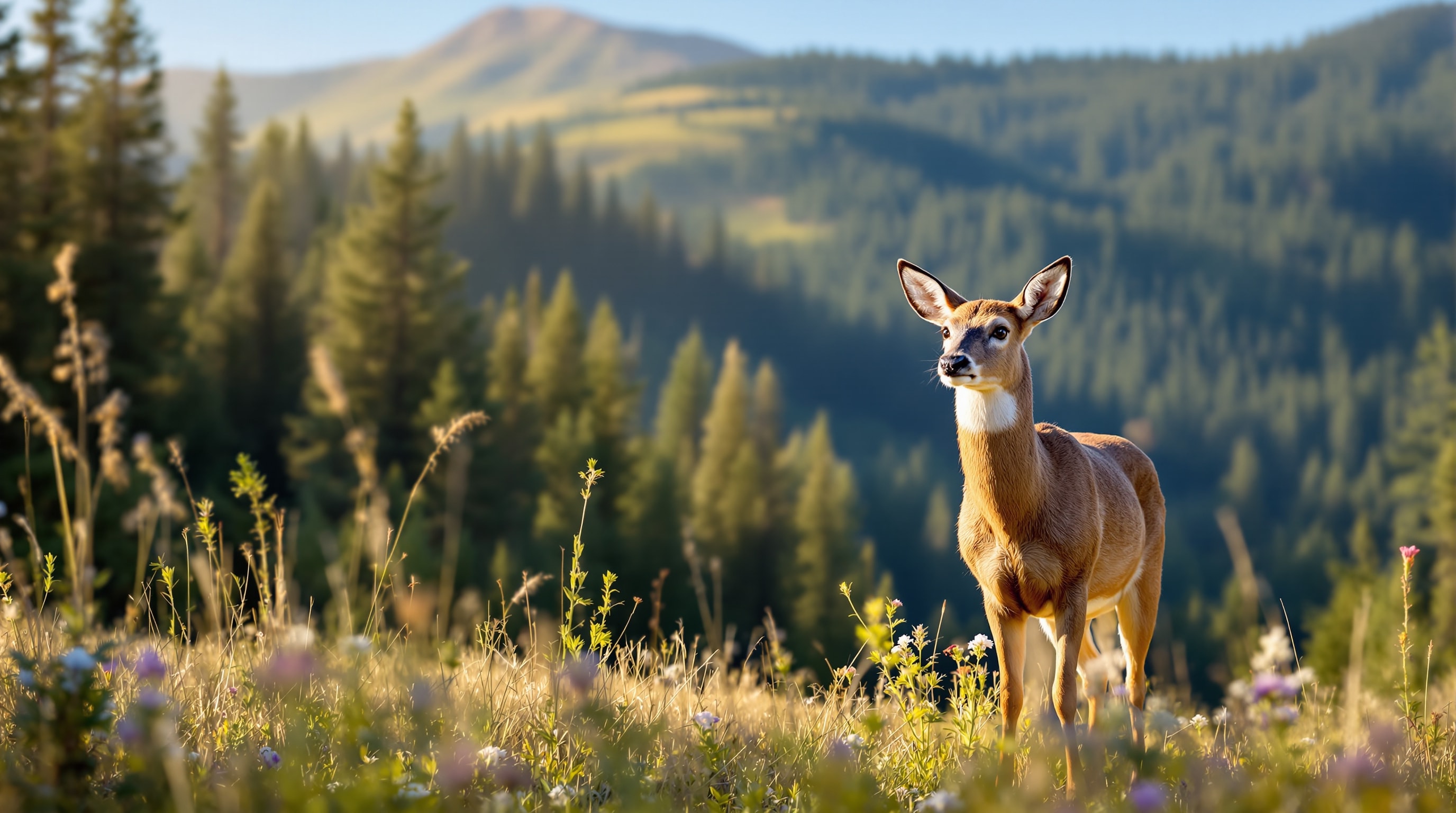
Wrapped in national forest and far from city lights, the San Isabel high country is a haven for wildlife by day and for stars by night. Slow down, keep your eyes open, and this quiet corner of the Wet Mountains reveals more the longer you look.
Wildlife of the Wet Mountains
The forest and meadows around the lake support a rich cast of Rocky Mountain wildlife. Mule deer and elk browse the edges of clearings at dawn and dusk, black bears roam the timber (especially in late summer as they fatten for winter), and wild turkeys, foxes, and the occasional bobcat move through the trees. Abert's squirrels flick through the ponderosas, and marmots sun themselves on rocks higher up. Overhead, hawks and eagles ride the thermals, while Steller's jays, nuthatches, and hummingbirds keep the forest lively.
The best wildlife watching is early and late in the day, when animals are most active and the light is kindest. Move slowly, keep quiet, and always give animals room — a good pair of binoculars beats a close approach every time. For guidance on Colorado's wildlife and how to watch it responsibly, Colorado Parks and Wildlife is an excellent resource, with tips on everything from bear-aware camping to ethical viewing distances.
Bear country basics
This is black bear country, and a few simple habits keep both you and the bears safe. Store food, trash, and scented items securely, never leave a cooler unattended at a picnic site, and keep a clean camp. Bears that learn to associate people with food often come to a bad end, so responsible visitors protect the animals as much as themselves. If you see a bear, keep your distance, never approach for a photo, and give it a clear path away.
A wolf refuge in the mountains
The wider region is also home to a well-known wolf sanctuary, Mission: Wolf, which cares for rescued wolves and wolf-dogs in a remote mountain setting west of the lake. Visiting a sanctuary is a memorable way to learn about these animals up close and support their care. As with any wildlife facility, check current visiting arrangements ahead of time, since remote sanctuaries often ask visitors to plan in advance and may keep seasonal hours.
Wildflowers and the changing year
The plant life keeps its own calendar worth watching. Spring brings the first green to the meadows and the rush of snowmelt through the drainages; by July the high openings blaze with columbine, paintbrush, and lupine; and come late September the aspens set the slopes on fire with gold before the first snows. Each turn of the season rearranges what you will see and hear in the forest, so no two visits are quite alike — a reason many travelers return again and again.
Some of Colorado's darkest skies
When the sun drops behind the ridges, San Isabel offers a second show. With little light pollution for many miles, the night sky here blazes with stars, and on a clear, moonless night the Milky Way arcs from horizon to horizon. Bring a blanket, let your eyes adjust for twenty minutes, and look up. Meteor showers, planets, and satellites are all easy to spot far from the glare of the city, and the nearby Wet Mountain Valley towns of Westcliffe and Silver Cliff are a certified International Dark Sky Community — proof of just how dark these skies can be.
- Best conditions — clear, moonless nights away from any outdoor lighting.
- Bring — a red-filter flashlight, warm layers, and patience while your eyes adjust.
- Where — open spots near the lake or a meadow with a wide view of the sky.
Enjoying it responsibly
This abundance depends on visitors treating the land gently. Keep a respectful distance from every animal, never feed wildlife, secure food when camping, and follow all fire restrictions. Pair a wildlife dawn with a quiet forest walk on the hiking trails, add it to your list of things to do, and consider spending the night to catch both the sunset animals and the midnight stars.